Yoga Teacher Training in Chiang Mai: A Guide for Beginners
April 17, 2026
Choosing a 200-hour Yoga Teacher Training (YTT) is a profound milestone in a practitioner’s life. Chiang Mai has steadily become one of the most sought-after destinations for yoga teacher training, especially for those looking for a balance between traditional learning and a calm, immersive environment.
Chiang Mai is widely regarded as one of the safest and most culturally rich destinations for solo travelers, which is one of the reasons it continues to attract yoga students from around the world.
If you’re exploring options for a 200-hour yoga teacher training in Chiang Mai, it’s helpful to look beyond just certifications and consider factors like teaching style, environment, and curriculum depth. For a sincere seeker, the challenge isn’t just finding a course; it’s finding a program that offers a logical bridge between ancient wisdom and the modern human condition.
Why Consider a Yoga Teacher Training in Chiang Mai?
Chiang Mai has earned its reputation as a global hub for wellness, and for those pursuing a yoga teacher training in Chiang Mai, the experience in this city can range from a vibrant “yoga holiday” to a deep, transformative and spiritual immersion.
While many choose a location for its convenience, a sincere yoga journey requires an environment that supports the nervous system and the spirit. Chiang Mai is unique because the entire town feels like a living extension of a yoga practice, offering a rare, peaceful balance between ancient tradition and modern comforts.
Chiang Mai serves as a supportive backdrop for your training through several key pillars:
Spiritual Heritage: With golden temples on nearly every corner, the city’s rich history is a constant reminder of the spiritual depth that anchors the region.
Natural Friendliness & Safety: Known for its “happy people” and a culture of genuine warmth, the city offers a safe, welcoming atmosphere for travelers from all over the world.
A Hub for Sincere Seekers: Chiang Mai attracts a global community of young people and lifelong learners seeking different wisdoms, creating an energy of shared growth and conscious living.
Health & Sustainability: It is a great place for plant-based nutrition, filled with sustainable markets and health-focused cafes that make a vegan lifestyle effortless.
Modern Infrastructure: You benefit from high standards of cleanliness and easy access to world-class medical care, ensuring peace of mind throughout your stay.
Ease of Connection: With excellent transport links and a highly walkable Old Town, the logistics of travel remain simple, allowing you to focus entirely on your inner work.
If you’re planning to enroll in a 200 Hours yoga teacher training in Chiang Mai in 2026 or 2027, this guide will help you understand what to expect, how to choose the right program, and what factors actually matter before making your decision.
So, let us also explore the essential pillars of a comprehensive yoga education, helping you choose a path that is as scientifically grounded as it is spiritually authentic.
1. The Pedagogy of Intimacy: Choosing Your Learning Environment
Chiang Mai is a vibrant hub that offers a variety of educational settings to suit different personalities. For many practitioners, a large-group environment provides a wonderful sense of community and high-energy social connection.
However if you are a sincere yoga practitioner seeking for an authentic yoga experience, then the traditional mentor-student model favors an intimate and contemplative space allowing one towards holistic growth and life transformative experience.
In the traditional Indian lineage, yoga was rarely a mass transmission; it was a heart-to-heart dialogue. By maintaining a small, intentional intake of students, you are not lost in a crowd, but supported through direct mentorship and physiological precision that is only possible in an intimate setting.
The teacher can effectively guide you to experience the deep nervous healing and the depth of the Yoga scriptures. This intentional scale ensures that each student’s journey is supported with the direct lead teacher, one-on-one guidance that traditional yoga was always meant to provide.
2. The Bridge of the “Global Teacher”: Tradition Meets Modernity
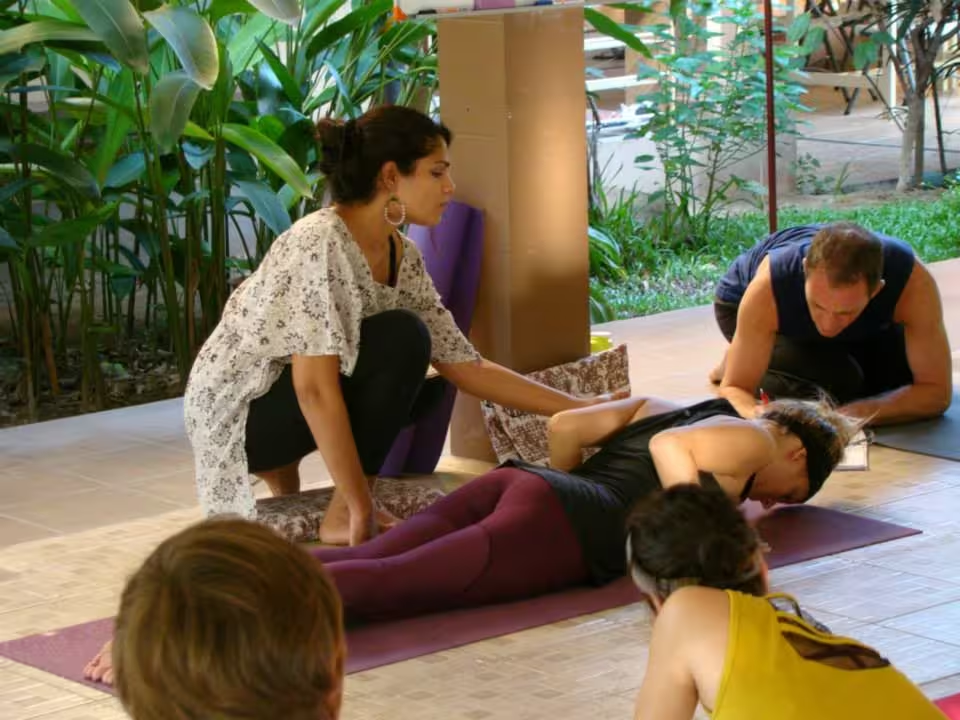
One of the most vital aspects of a training is the lineage of the instructor. There is a rare synergy when a teacher carries an authentic Indian background while possessing a deep understanding of the Western psyche.
Our lead teacher, Jeenal Mehta, embodies this bridge; originally from India, she has called Chiang Mai home for 15 years, using this peaceful town as a sanctuary and base from which she travels globally to share traditional wisdom with Western students.
This “Global Teacher” perspective, honed through years of international teaching and a life rooted in Chiang Mai, allows for a seamless translation of ancient Sanskrit concepts into logical, contemporary frameworks.
By choosing a training led by an expert who has studied directly with masters and monks in India, yet understands the complexities of modern neuroscience and psychotherapy, the practice becomes relevant, practical, and deeply relatable to your daily life, no matter where in the world you call home.
3. Neuroscience: The Science of the “Why”
Traditional Hatha Yoga is a profound system of energy management, but for the modern mind, understanding the “why” is just as important as the “how.” A sincere training should bridge the gap between spirituality and clinical understanding. Chiang Mai is the ideal setting for this study; its quiet, low-stress environment provides the perfect “clinical baseline” for students to actually feel their nervous systems shifting.
By integrating Brain and Neuroscience into our training in this peaceful town, we move beyond the “mystery” of yoga to explore:
- The Spine and Nervous System: Understanding spinal alignment as the pillar of neurological health and stress regulation.
- Neuroplasticity: How consistent meditation and mantra can literally rewire the brain’s response to stress, improving focus and cognitive resilience.
- Hormonal Balance & Women’s Health: How yogic practices influence the endocrine system, supporting reproductive wellness and emotional balance through different life stages.
4. Nutrition as Alchemy: Vegan and Ayurvedic Living in a Wellness Hub
A yoga teacher training in Chiang Mai is incomplete without focusing on diet, as the city is a global leader in plant-based living. We utilize the incredible local access to sustainable, organic markets to provide a 100% Vegan and Ayurvedic approach. In the town of this ‘green’ city, we look at how nutrition impacts gut health and mental clarity.
In the yogic tradition, the mind is formed from the essence of the food we consume. Therefore, a yoga teacher training in Chiang Mai is incomplete without a focus on Nutrition and Diet.
An intentional program should provide a 100% Vegan and Ayurvedic approach to nourishment. This isn’t just about ethics; it’s about “Sattva” (purity). We look at how plant-based nutrition impacts:
Gut Health: The vital connection between the enteric nervous system (the “second brain”) and emotional stability.
Safety and Hygiene: In a retreat setting, high standards of hygiene and food preparation are fundamental. A clean environment is a prerequisite for a clear mind and a safe detoxification process.
5. The Sacred Sound: Sanskrit and Chanting in a Spiritual Town
Yoga is a vast tree, and the physical postures (Asanas) are but one branch. To truly honor the path, a student must be introduced to the linguistic and philosophical foundations of the practice, an approach that becomes especially profound during a yoga teacher training in Chiang Mai.
Chiang Mai is a perfect place for this deep practice. With Chanting, we honor this local atmosphere by introducing students to the linguistic foundations of the practice. Learning Sanskrit and the Scriptures like the Yoga Sutras here, surrounded by the town’s ancient spiritual energy, makes the study feel alive and grounded.
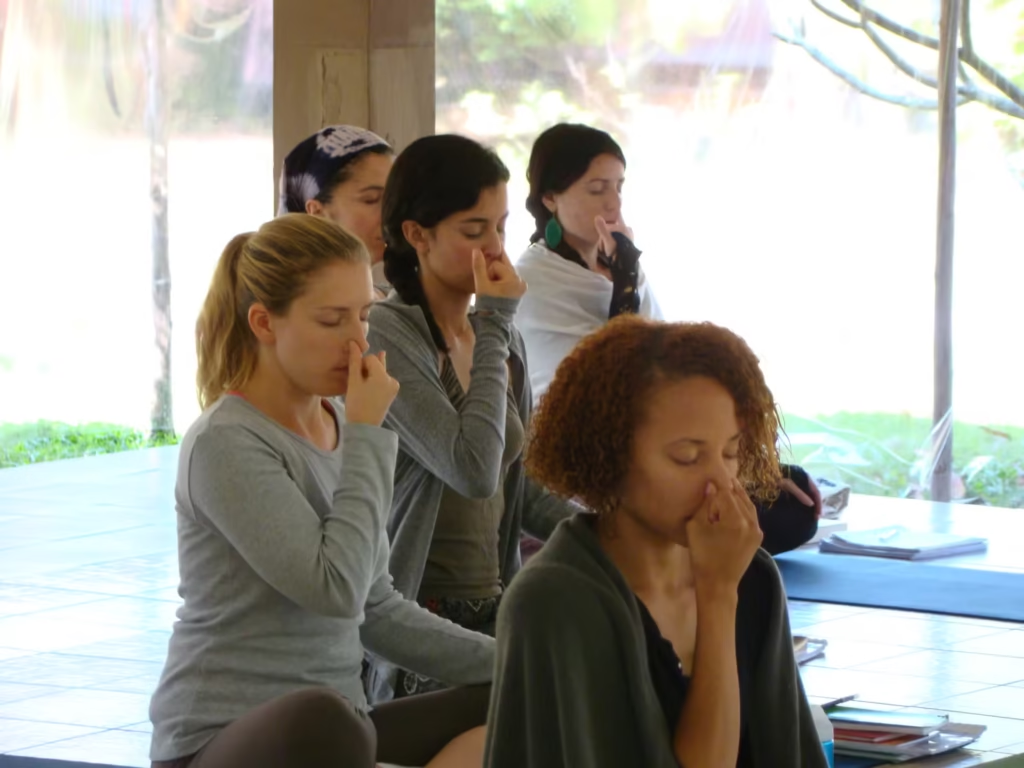
Sanskrit and Chanting: Learning the vibrational power of Sanskrit is about resonance. Chanting helps clear the mental space and focus the mind in a way that silent meditation sometimes cannot.
The Scriptures: A deep immersion must include a structured study of the Yoga Sutras of Patanjali, 8 Limbs of Yoga and the Bhagavad Gita. These texts are manuals for the human mind, offering timeless solutions to modern dilemmas like anxiety, ego, and purpose.
6. Philosophical Synthesis: Hindu and Buddhist Connections in Chiang Mai
A comprehensive 200-hour course doesn’t just stick to one line of thought. It honors the historical and spiritual connection between Indian/Hindu philosophies and Buddhist perspectives. Both traditions share deep roots in understanding suffering and liberation.
Seeing how Yoga, Vedanta, and Mindfulness all point toward the same inner stillness makes the training feel universal and profound. Chiang Mai is the perfect classroom for this study because it is a place where Hindu roots and Buddhist traditions live side-by-side.
Our curriculum explores this historical connection, helping you see how Yoga, Vedanta, and the local Mindfulness traditions of Thailand all point toward the same inner stillness.”
7. Asana: Connecting Movement to Emotion and Trauma
In a sophisticated training, an Asana is never just a stretch; it is a psychological tool. Modern research shows that we store emotional stress and trauma as physical tension in the hips, shoulders, and psoas. The training should teach you how to make the Asana-Emotion Connection, using the body to release stored trauma, improve focus, and cultivate “Sthira” (steadiness).
Chiang Mai’s humble and relaxing atmosphere provides the perfect “emotional container” for this work, making a yoga teacher training in Chiang Mai particularly conducive to this level of inner exploration.
The town’s natural pace encourages a sense of gentleness that enables students to connect more deeply with their physical bodies.
In this supportive environment, we teach you how to make the Asana-Emotion Connection, using the practice to release stored trauma, cultivate balance, and find inner stillness.
8. The Art of Teaching: Inclusive Wisdom for a Global Community
Becoming a teacher means learning how to hold space for different types of people. A high-quality training will give you the tools to adapt the practice for various ages and abilities.
Because Chiang Mai attracts such a diverse, global community of seekers, our teaching methodology focuses on inclusivity. We prepare you to teach all ages and abilities, mirroring the diverse and welcoming nature of this wonderful place
9. Yoga Lifestyle and Cultural Excursions
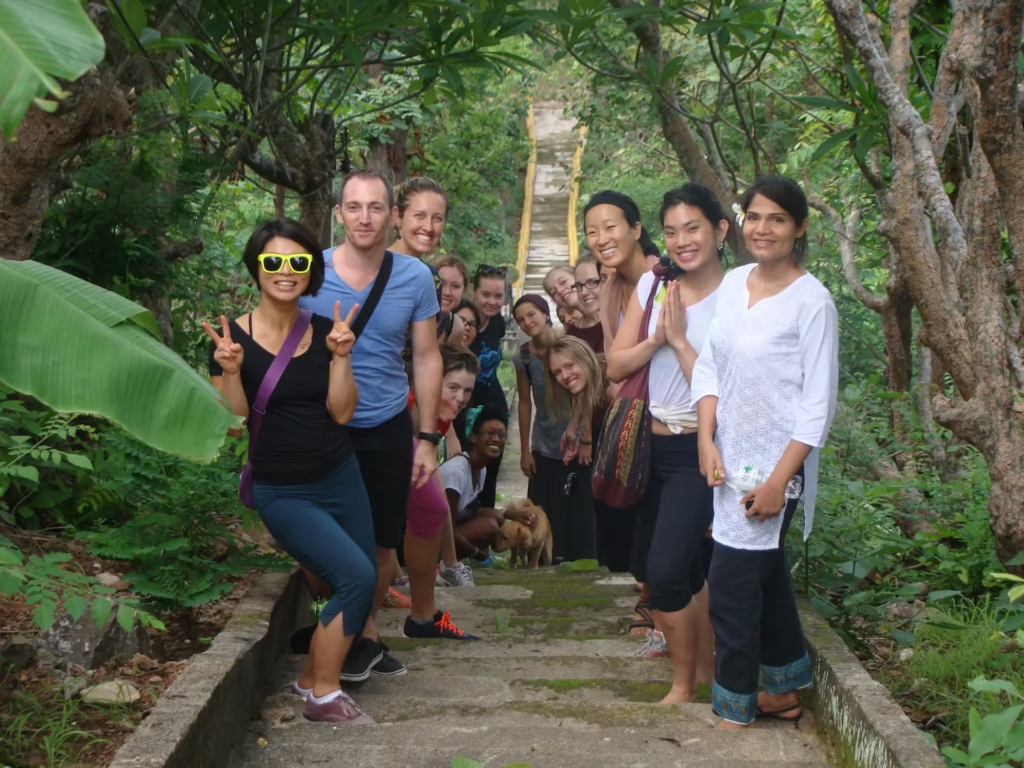
Chiang Mai offers a rich spiritual backdrop that shouldn’t be confined to the classroom. Cultural excursions, such as visiting ancient forest temples help the student see that Yoga is a way of interacting with the world.
This “Yoga Lifestyle” is about living with awareness and compassion.
Considering an Immersive Yoga Teacher Training experience in Chiang Mai?
If you’re looking for a yoga teacher training in Chiang Mai that goes beyond just earning a certification, it may be worth exploring smaller, more intentional programs.
Wise Living Yoga Academy offers an intimate and holistic 200-hour teacher training designed for those who want a deeper, more structured learning experience with these extensive lists of benefits.
Authentic Lineage & Tradition: We honor the path by remaining rooted in an authentic Indian lineage, studied directly under masters and monks in India – an approach which is deeply shaped by our own personal journey.
Expert Multi-Dimensional Leadership: Our lead teacher is a rare synthesis of East and West, combining traditional upbringing with a background in Yoga Therapy, Spirituality, Neuroscience and Psychotherapy.
Science-Backed Holistic Healing: The program combines traditional Hatha yoga practices with insights from neuroscience and modern physiology, helping you understand not just what to practice, but why it works.
Integrated diet & lifestyle for deep healing: Our 200 YTT addresses a Yogic & Ayurvedic nutrition, hormonal health, and gut health.
Intimacy of Mentorship: With a focus on small group sizes, the experience is designed to be more personal, with greater access to guidance, feedback, and mentorship throughout the course.
The Sattvic Environment: A 100% vegan, high-hygiene sanctuary designed for true detoxification and healing.
Immersive Experience: The training is conducted in a quiet, retreat-style setting in the heart of Chiang Mai, allowing you to step away from daily distractions and fully immerse yourself in the process.
Linguistic Authenticity: Dedicated study of Science backed vocabulary, Important Sanskrit words, chanting and study of foundational scriptures like the Sutras and the Bhagavad Gita with accurate English translations without altering the original essence of Yoga.
Somatic & Emotional Release: Connecting Asana practice to emotional well-being and trauma release.
Quiet Sanctuary: Our retreat-style setting near Thapae Gate honors your need for stillness and inner focus, yet it remains perfectly situated within easy walking distance of Chiang Mai’s most historic temples and vibrant local markets.
If this approach resonates with you, you can explore the full program details, curriculum, and upcoming training dates in our 200 Hours Yoga Teacher Training Course.
Categories: Holistic Health, Spirituality, Travel, Yoga Retreats, Yoga Teacher Training
